

News
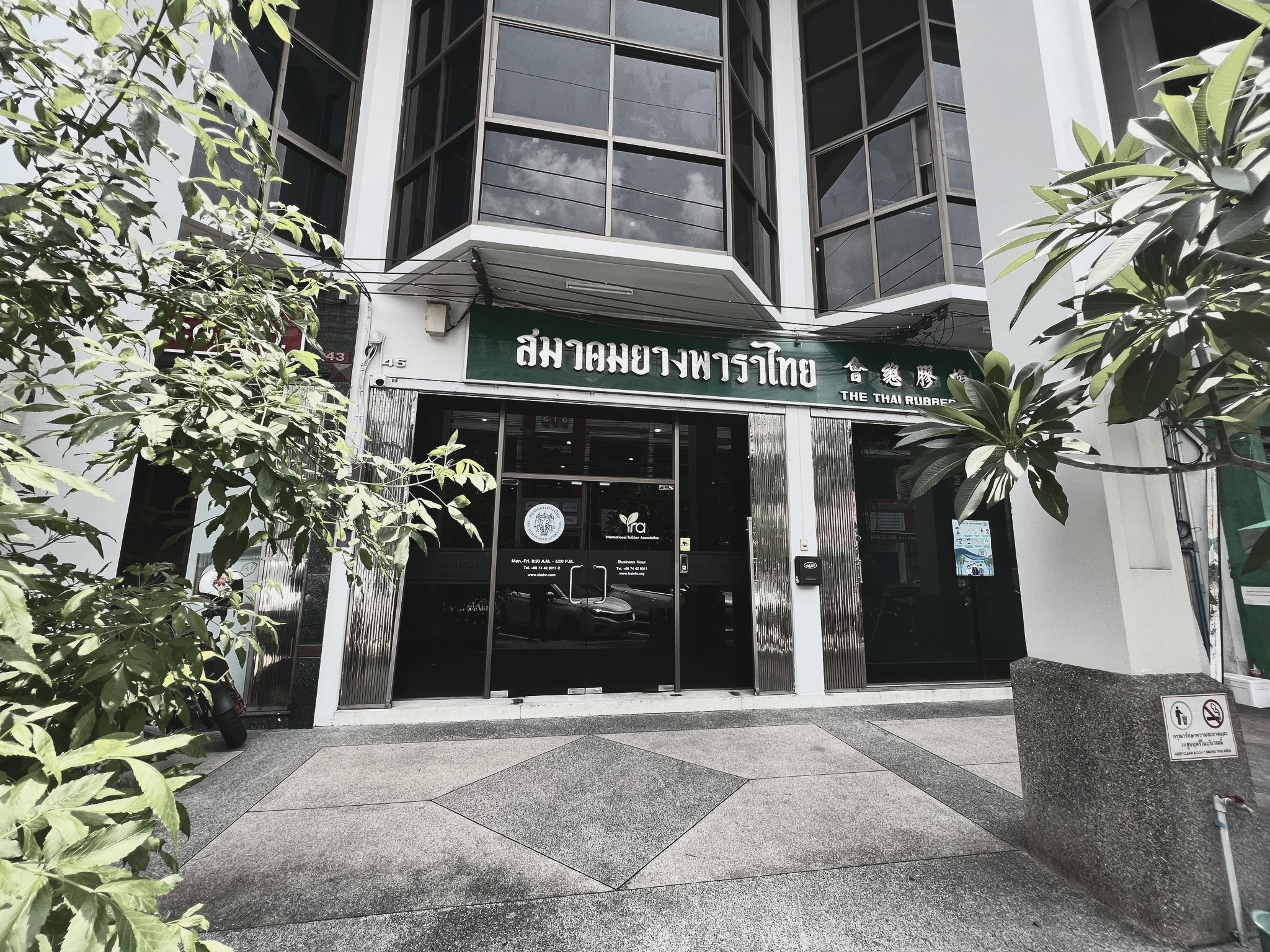
Thailand Monthly Rubber Report – October 2025
World Economy
In October 2025, the global economy continued to face persistent pressures and remained in a phase of “slowing growth without entering a severe recession.” While some supporting factors were still present, the foundation of growth showed increasing signs of weakness, accompanied by elevated risks and an uncertain recovery outlook. According to the latest International Monetary Fund (IMF) report, global economic growth is projected at approximately 3.2% in 2025 and 3.1% in 2026 — a slight upward revision from previous forecasts, yet still reflecting a moderate slowdown compared with earlier periods.
In October 2025, Thailand’s exports continued to expand at a healthy pace, although growth moderated slightly compared with the early part of the year. Key supporting factors included steady performance in the digital technology industry, increased demand for processed agricultural products, and broader diversification of export destinations. Nonetheless, several downside risks remained, stemming from ongoing international trade retaliation measures, the slowdown of China’s economy, and concerns over the appreciation of the Thai baht. Thailand’s economic growth is projected at 2.2% in 2025 and 1.6% in 2026, with core inflation for both years expected to remain around 0.9%. According to the Monetary Policy Committee (MPC) meeting held on 8 October 2025, the Committee voted 5 to 2 to maintain the policy interest rate at 1.50% per annum, while two members supported a 0.25 percentage point reduction to 1.25%.
Weather
October 2025 marked the transition from the rainy season to the cool season in Thailand. Weather conditions were variable, with widespread thunderstorms and cooler morning temperatures. During the early and middle parts of the month, the upper regions of the country experienced unstable weather, characterized by frequent thunderstorms across several areas. In the southern region, heavy to very heavy rainfall was reported in many locations due to the influence of a tropical cyclone moving across the South China Sea into Thailand. This was further intensified by a strengthening southwest monsoon prevailing over the Andaman Sea and Thailand, resulting in increased rainfall across the country.
Rubber Situation
In October 2025, rubber prices in Thailand remained relatively stable, with minor adjustments from the previous month. The overall average price showed a slight change, influenced by fluctuations in global and Chinese demand and supply, as well as weather conditions that may have affected production levels. During the month, the average prices were 54.46 baht per kilogram for Field Latex (price at factory), 53.52 baht per kilogram for USS3 (Unsmoked Sheets) (local price), and 66.52 baht per kilogram for RSS3 (Ribbed Smoked Sheets) (FOB price). While sheet rubber prices declined compared to the previous month, the average prices of field latex, concentrated latex, and block rubber (STR) recorded slight increases. In September 2025, Thailand exported 355,000 tons of rubber, representing a 1.38% month-on-month increase in volume and a 3.13% increase in value, totaling 21.1 billion Baht. Over the first three quarters of 2025, Thailand exported a combined 3.3 million tons of natural and mixtures rubber — a 7% year-on-year increase. Exports to China reached 2 million tons, up 26% from the same period last year.
Capt. Thammanat Prompao announced plans to continue implementing urgent policy initiatives over the next four months, focusing primarily on addressing the problem of declining agricultural product prices. These initiatives are part of the government’s “Quick Win” framework under the Ministry of Agriculture and Cooperatives, as outlined during the policy briefing held on 2 October 2025 at the Royal Irrigation Department, Samsen. Key priorities include: 1. Immediate livelihood improvement – tackling the issue of falling agricultural prices and enforcing strict measures against illegal agricultural imports to maintain domestic market stability, and 2. The “Three Creations” initiative (first-phase urgent policies) – aimed at creating income, creating markets, and creating opportunities for farmers. In addition, existing policies will be continued to promote long-term sustainable development.
Additionally, the Ministry of Agriculture and Cooperatives, in collaboration with the Customs Department, has implemented stringent measures to regulate cross-border rubber transportation. These measures require detailed inspection of customs declarations, with rubber shipments mandated to be transported in sealed containers equipped with GPS tracking throughout the route. Relevant authorities are instructed to jointly inspect product quality and conduct X-ray checks at both the point of origin and destination. The initiative will initially be piloted in two key provinces — Ranong and Tak. At the same time, the Ministry of Agriculture and Cooperatives has invoked legal mechanisms under the Rubber Control Act B.E. 2542 (1999) to designate controlled zones for rubber transportation. This aims to ensure traceability of production sources and effectively prevent the smuggling of illegal rubber into the country.
Crude Oil Prices: WTI & Brent
Crude oil prices for both West Texas Intermediate (WTI) and Brent benchmarks increased following the United States’ announcement of new sanctions against a major Russian oil producer, raising concerns that Russian crude exports could decline. According to data released by the U.S. Energy Information Administration (EIA), U.S. crude oil inventories for the week ending 17 October 2025 fell by 961,000 barrels, bringing total stockpiles down to 422.8 million barrels.
Reference : The Thai Rubber Association (TRA)
Latest News
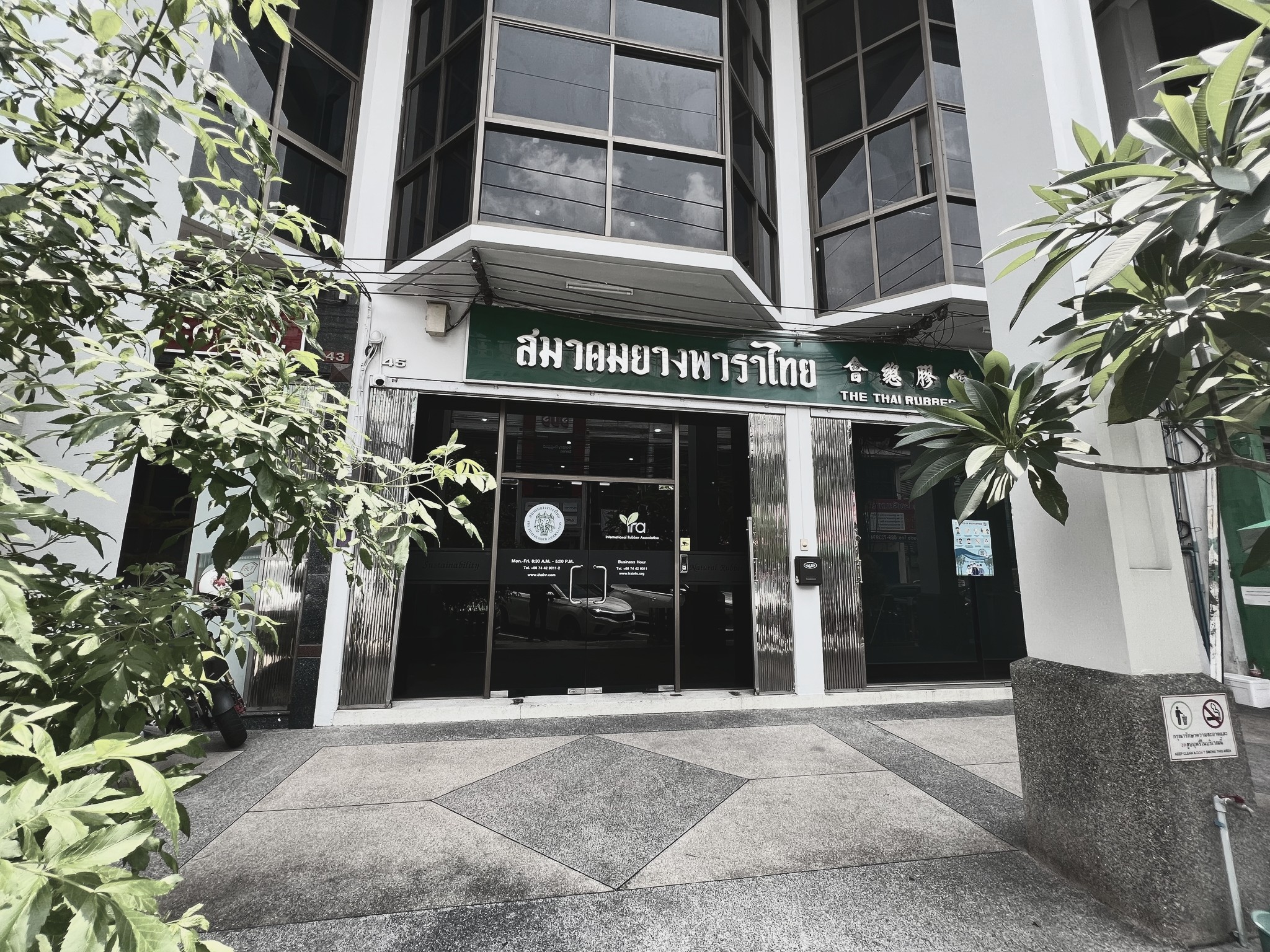
Thailand Monthly Rubber Report – December 2025


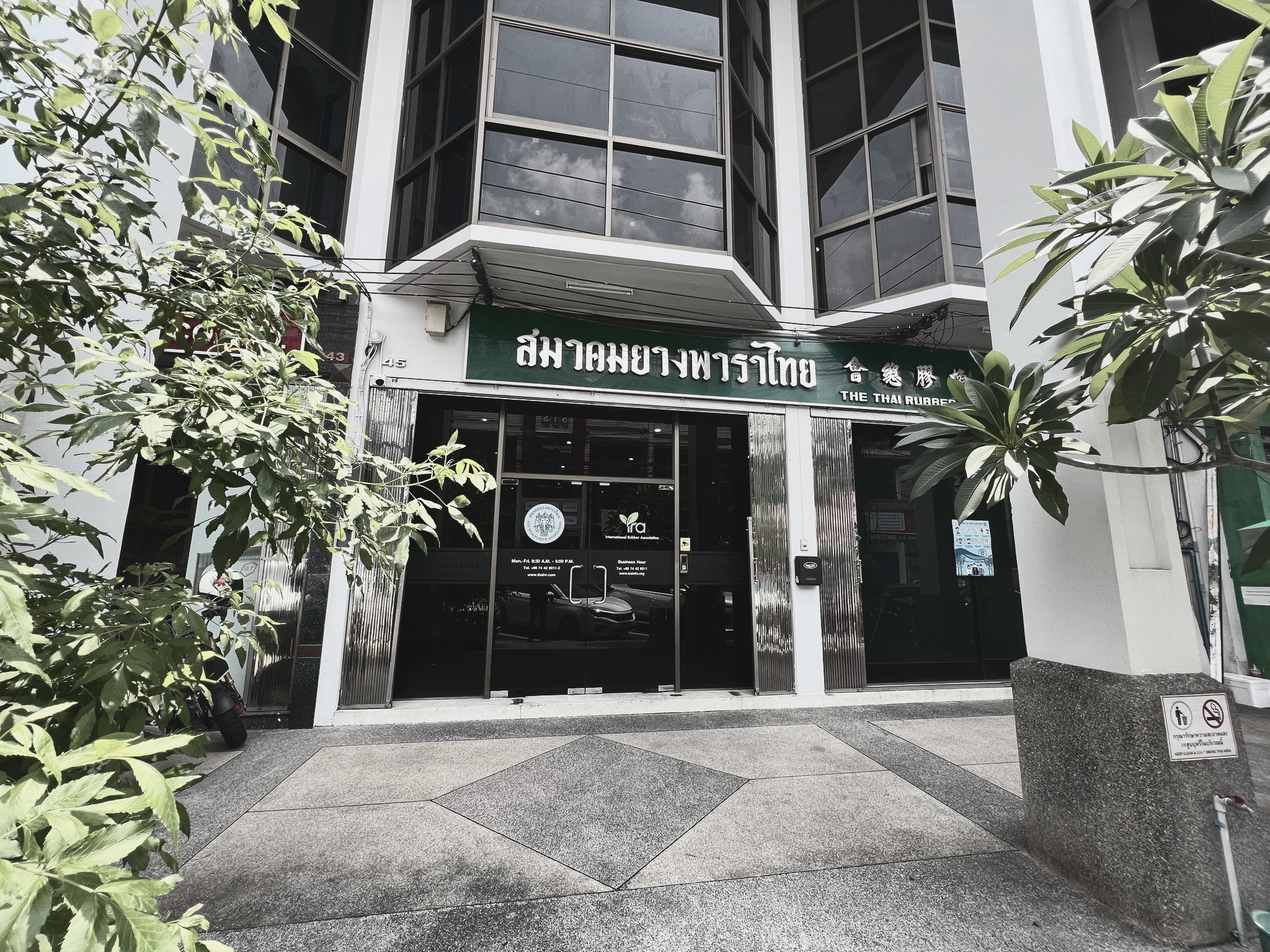
Thailand Monthly Rubber Report – November 2025

INTERNATIONAL RUBBER ASSOCIATION
SECRETARIAT
THE THAI RUBBER ASSOCIATION
45, 47 Chotivithayakul 3 Road, Hatyai, Songkhla 90110, Thailand
+66 74 429311, +66 74 429011-2
+66 74 429312
secretariat@irainfo.org