

News
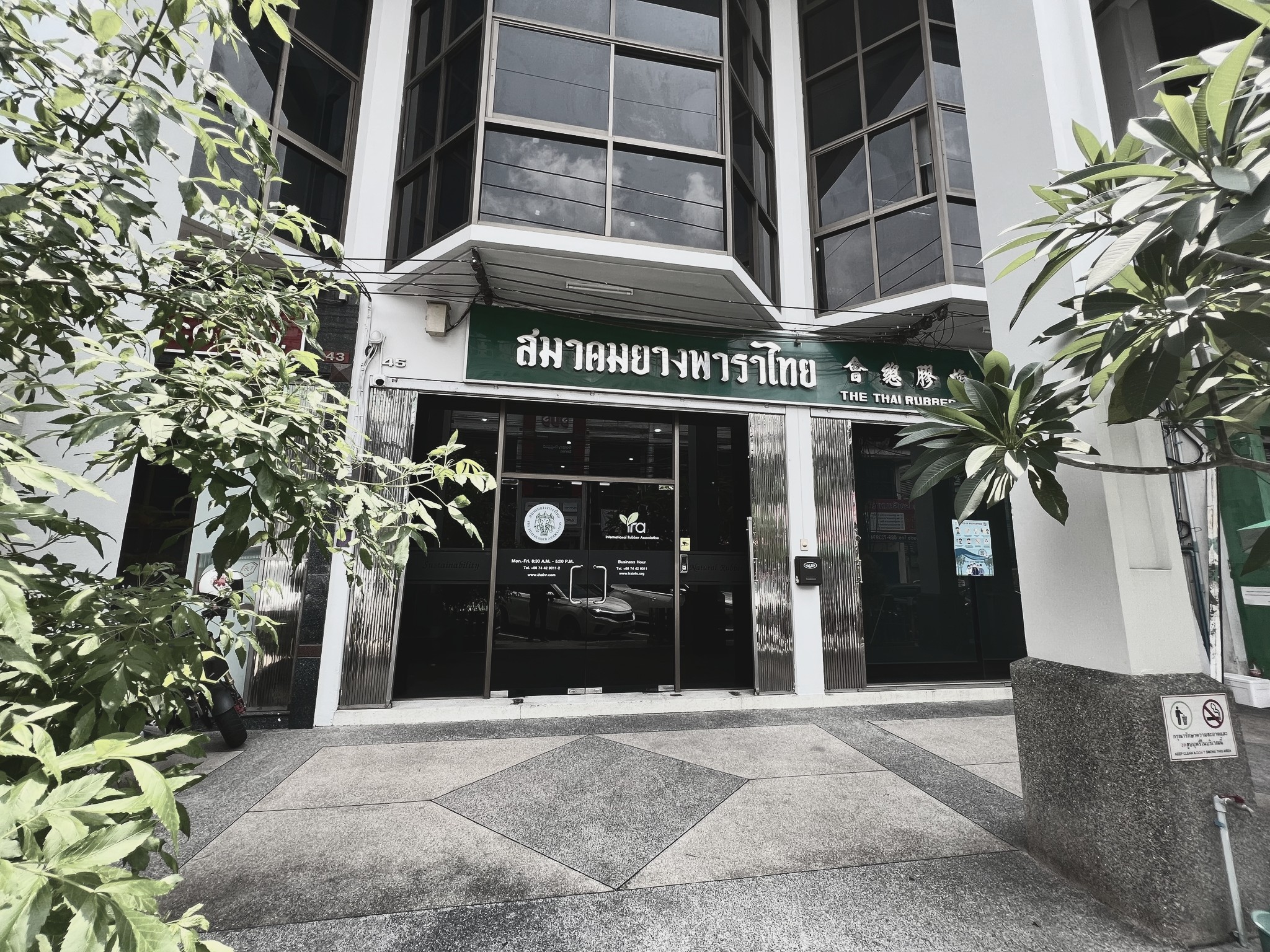
Thailand Monthly Rubber Report – December 2025
World Economy
The global economy continues to grow steadily despite pressures from international trade policies and geopolitical uncertainties, such as renewed trade wars and U.S. tariff policies. These U.S. measures continue to impact global trade and supply chains, particularly concerning goods from China and Asia. Several central banks have begun cutting policy interest rates to support economies that are losing momentum due to trade barriers and policy shifts. Furthermore, the International Monetary Fund (IMF) projects that the U.S. economy will expand by approximately 2.0% in 2025, representing moderate growth. Meanwhile, China continues to face pressure from weak domestic demand, with the ongoing real estate crisis further weighing on investor confidence.
The Thai economy in December 2025 is trending toward a slow but sustained recovery, bolstered by the tourism sector and government stimulus measures. However, the outlook faces risks from U.S. tariff policies, challenges from decelerating exports, and high household debt. Most recently, on December 17, 2025, the Monetary Policy Committee (MPC) voted unanimously to reduce the policy interest rate by 0.25% per annum, lowering it from 1.50% to 1.25%, effective immediately. This rate cut to 1.25% aims to support the economy, with 2025 growth projected between 2.4% and 2.9%. Headline inflation is expected to remain low, primarily driven by energy and fresh food prices. Meanwhile, natural disasters—specifically the flooding in the South—have caused extensive damage and will require significant recovery capital. Furthermore, the Thai Baht has appreciated; since the beginning of the year, it has strengthened by 8% against the U.S. Dollar, with the weakening Dollar putting pressure on exporters. Moreover, the Federal Reserve has cut interest rates, while gold prices have increased. Amidst border tensions, if global trade does not see a meaningful recovery, growth in both China and Thailand may remain suppressed. While the export sector grew by approximately 5.5%, it faced late-year headwinds from U.S. customs duties and the influx of Chinese goods.
In summary, monitoring the economic landscape in 2026 requires a close focus on emerging risk factors carried over from 2025. Key priorities include global trade policies and domestic structural reforms, particularly U.S. customs tariffs, the trajectory of policy interest rates, and the expansion of AI technology. Furthermore, the pace of public budget disbursement and the upcoming political transition will be critical, as these factors may impact the continuity of economic stimulus measures and the recovery of the tourism sector.
Weather
The weather outlook for December 2025 indicates that Upper Thailand will continue to experience cool-to-cold conditions during the first half of the month. This is attributed to high-pressure systems from China periodically extending their influence over the region. Meanwhile, the Southern region will see persistent and heavy rainfall. Total precipitation in Upper Thailand is expected to remain near seasonal averages, whereas total rainfall in the South is projected to be approximately 20% above the norm.
Rubber Situation
In December 2025, the Thai rubber market experienced volatile prices with an upward trend, primarily driven by supply concerns due to erratic weather in key rubber-growing regions. Leaf fall disease remains a critical risk factor requiring close monitoring. To address these challenges, the Rubber Authority of Thailand (RAOT) has implemented the 'Rubber Sales Delay Program.' This initiative aims to regulate the volume of rubber entering the market to mitigate price volatility, ensure market stability, and provide liquidity to rubber farmer institutions while they await optimal sales windows. Furthermore, the RAOT continues to stabilize prices through its central rubber market mechanisms and by expanding its network of central and branch markets nationwide. Despite these domestic efforts, operators still face challenges from exchange rate fluctuations—specifically the appreciation of the Thai Baht. In December 2025, the average price of Field Latex (price at factory) was 53.75 baht per kilogram, while RSS3 (Ribbed Smoked Sheets) (FOB price) was priced at 66.74 baht per kilogram. The average price for concentrated latex (FOB Bangkok, Bulk) was 1,351.29 USD/MT. Regarding trade volume, November 2025 Thailand exports totaled 376,000 tons of rubber, valued at 21.7 billion baht—a month-on-month (MoM) decrease of 8.27% in volume and 7.88% in value.
Crude Oil Prices: WTI & Brent
Crude oil prices remain volatile due to escalating conflict between the United States and Venezuela. This follows the U.S. intensification of sanctions and the implementation of a naval blockade targeting oil tankers. According to the U.S. Energy Information Administration (EIA), U.S. commercial crude oil inventories for the week ending January 2, 2026, decreased by 3.8 million barrels, falling to a level of 419.1 million barrels.
Reference : The Thai Rubber Association (TRA)



INTERNATIONAL RUBBER ASSOCIATION
SECRETARIAT
THE THAI RUBBER ASSOCIATION
45, 47 Chotivithayakul 3 Road, Hatyai, Songkhla 90110, Thailand
+66 74 429311, +66 74 429011-2
+66 74 429312
secretariat@irainfo.org